
Flail Mower vs. Brush Hog: Which Is Better for Your Tractor?
Posted by Mathew S C. on Oct 30th 2026
STYRON AG PARTS | TRACTOR EQUIPMENT BUYING GUIDE
Flail Mower vs. Brush Hog: Which Is Better for Your Tractor?
Comparing a flail mower and a brush hog (rotary cutter)? Learn how each machine handles grass, pastures, brush, uneven terrain, and maintenance—then choose the right attachment for your tractor and property.
Both flail mowers and rotary cutters are popular three-point tractor attachments, but they use different cutting systems. Choosing the right one depends on the vegetation you mow, the finish you want, your tractor's PTO power, and how often you maintain the property.
Quick Answer: Choose a flail mower when you prioritize regular grass maintenance, finer material processing, or certain orchard and trail applications. Choose a brush hog / rotary cutter for rough pasture mowing, tall weeds, and brush within the cutter's rated capacity. Heavy-duty flail mowers can also handle some brush, so always compare actual model specifications.
In This Guide
How the Two Cutting Systems Work
Flail Mower vs. Brush Hog Comparison Chart
Which Mower Handles Your Conditions?
Horsepower, Width, and Tractor Fit
Maintenance and Ownership Costs
Farm-Maxx and Rotary Cutter Options
How to Choose the Right Mower
Frequently Asked Questions
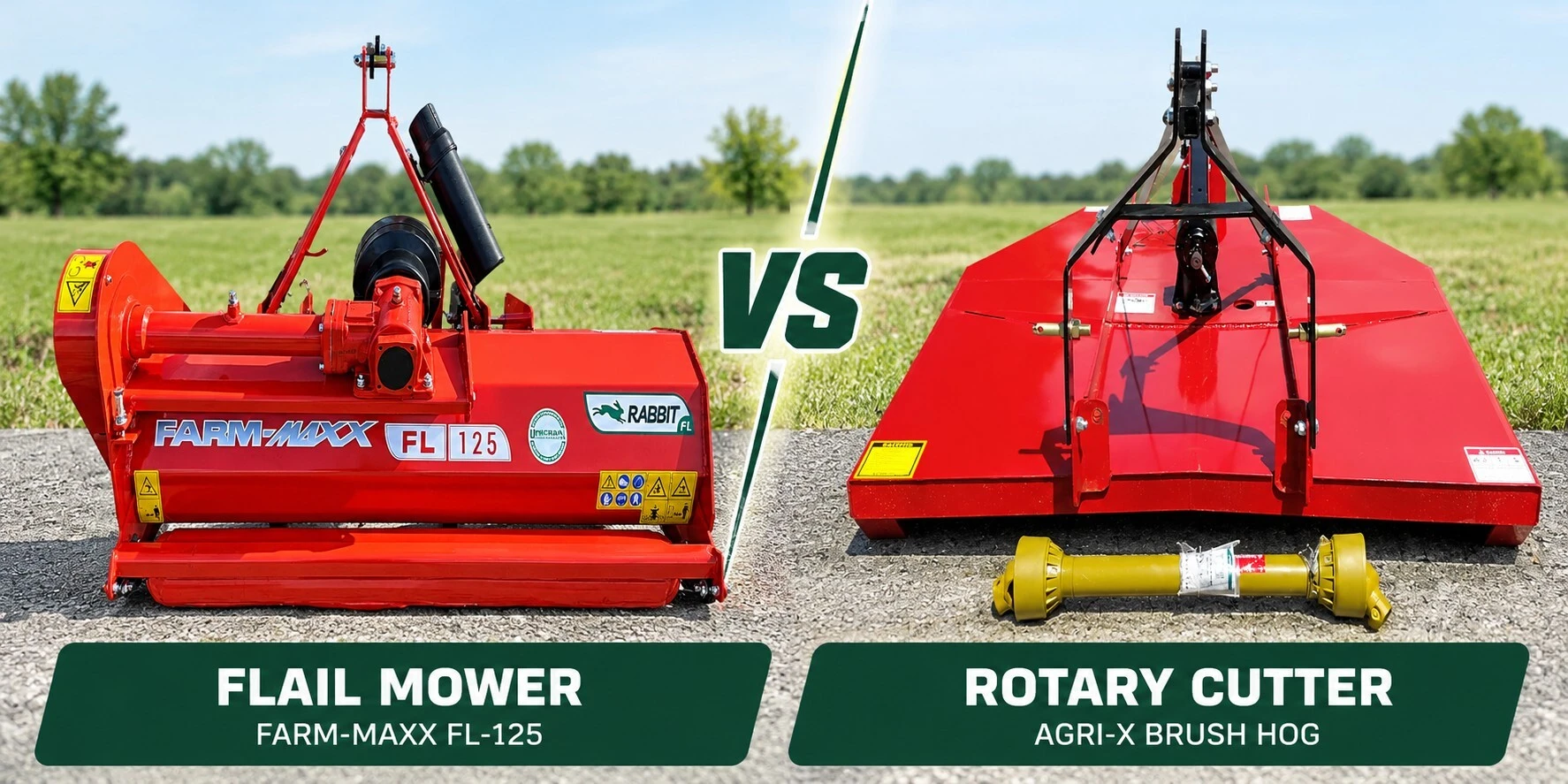
What Is the Difference Between a Flail Mower and a Brush Hog?
FLAIL MOWER
Horizontal Rotor with Knives or Hammers
A flail mower uses multiple cutting elements attached to a horizontal rotor. As the rotor spins, knives or hammers cut vegetation beneath the mower housing.
The repeated cutting action often leaves smaller clippings and a more even-looking finish in suitable conditions.
Common applications: Maintained acreage, orchards, trails, grass, and some light-to-moderate brush depending on the model.
BRUSH HOG / ROTARY CUTTER
Heavy Swinging Blades Beneath a Deck
A rotary cutter uses heavy blades spinning in a horizontal plane beneath the mower deck.
It is designed for rough-cutting applications such as pastures, overgrown fields, tall weeds, and brush within its rated cutting diameter.
Important: "Brush hog" is a common generic term for a rotary cutter. Bush Hog is also an equipment brand.
Flail Mower vs. Brush Hog: Side-by-Side Comparison
Understanding the differences in cutting performance, maintenance, and applications can help you make a more informed equipment purchase.
Actual performance depends on the mower design, vegetation, operating conditions, and manufacturer specifications.
| Feature | Flail Mower | Brush Hog / Rotary Cutter |
|---|---|---|
| Cutting Mechanism | Horizontal rotor with knives or hammers | Heavy swinging blades beneath a deck |
| Cut Appearance | Typically finer and more uniform | Generally rougher in tall vegetation |
| Regular Grass Mowing | Excellent for many maintained areas | Effective with a coarser finish |
| Overgrown Pastures | Suitable within model ratings | Common first choice for rough mowing |
| Woody Brush | Depends heavily on model | Often preferable with appropriate cutting rating |
| Clipping Size | Often smaller, more finely processed material | Often longer cut material |
| Maintenance | Knives, hammers, belts, bearings, roller | Blades, gearbox, driveline, tailwheel |
| Best Overall Use | Routine maintenance and finer cutting | Rough-cut pasture and field maintenance |
Which Mower Is Better for Grass, Brush, Pastures, and Uneven Ground?
Grass, Trails, and Regularly Maintained Acreage
A flail mower is often the better match when you mow frequently and care about the finished appearance. Its rotor can process grass into smaller pieces, although a flail mower is not the same as a dedicated finish mower.
Tall Weeds and Overgrown Pastures
A rotary cutter is a practical choice for rough fields and pasture maintenance. Heavy swinging blades are designed to cut tall grass, weeds, and vegetation within the machine's published capacity.
Brush and Small Saplings
Rotary cutters are commonly selected for brush management, but cutting capacity varies significantly between models. Heavy-duty flail mowers may also handle woody vegetation.
Never assume a mower can cut a particular stem diameter without checking its manufacturer's specifications.
Orchards, Fence Lines, and Ditches
Flail mowers can be particularly useful around orchards, maintained trails, and similar properties. Offset and ditch-bank flail mower designs allow the cutting head to reach certain areas beside the tractor.
For slopes and ditch banks, always follow the tractor and implement manufacturer's operating-angle and stability limits.
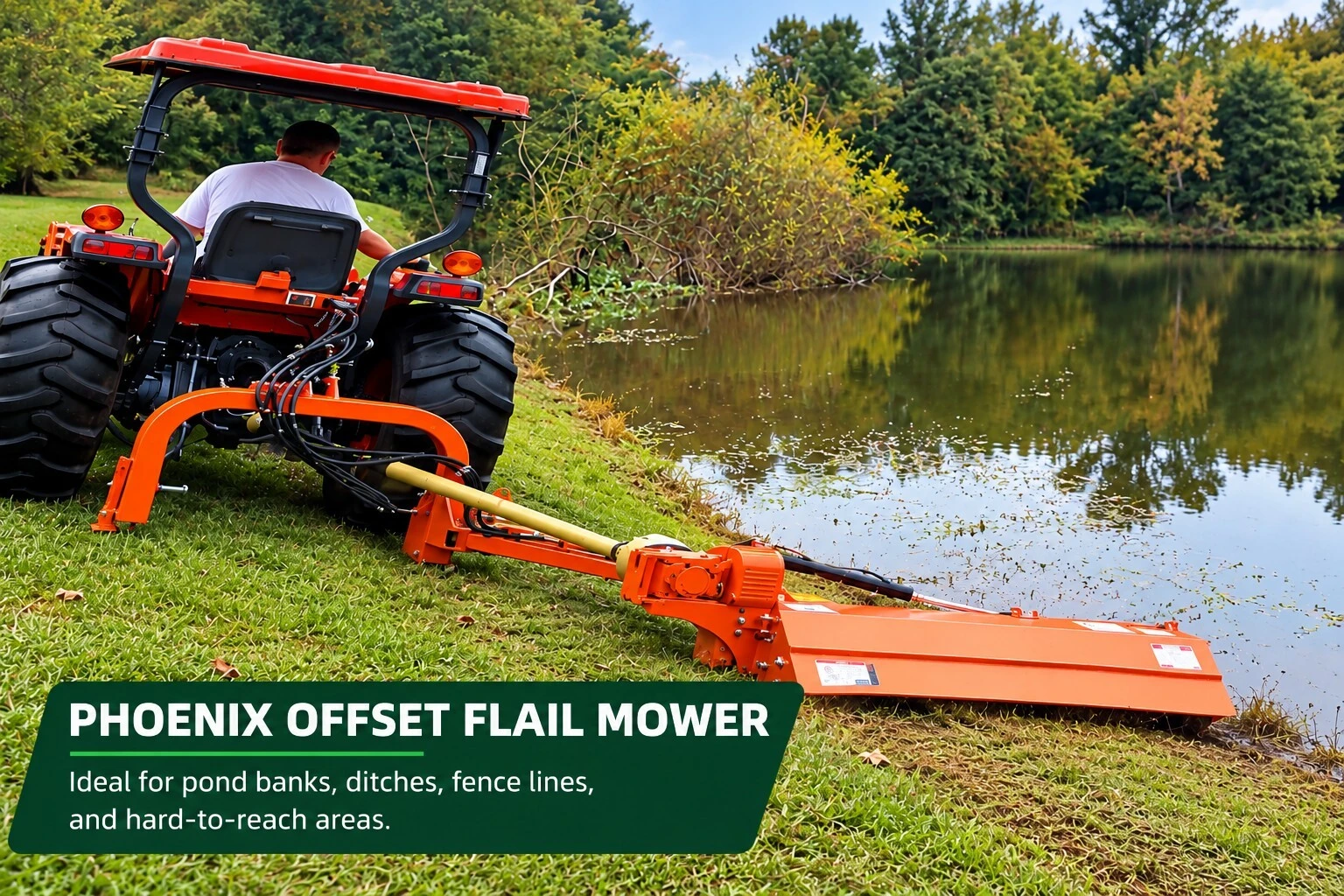
Offset flail mower maintaining grass along a pond bank.
Styron Ag Parts Tip: Before choosing a mower, consider the thickest vegetation you expect to cut—not just the average grass height. Inspect the mowing area for obstacles and keep bystanders clear.
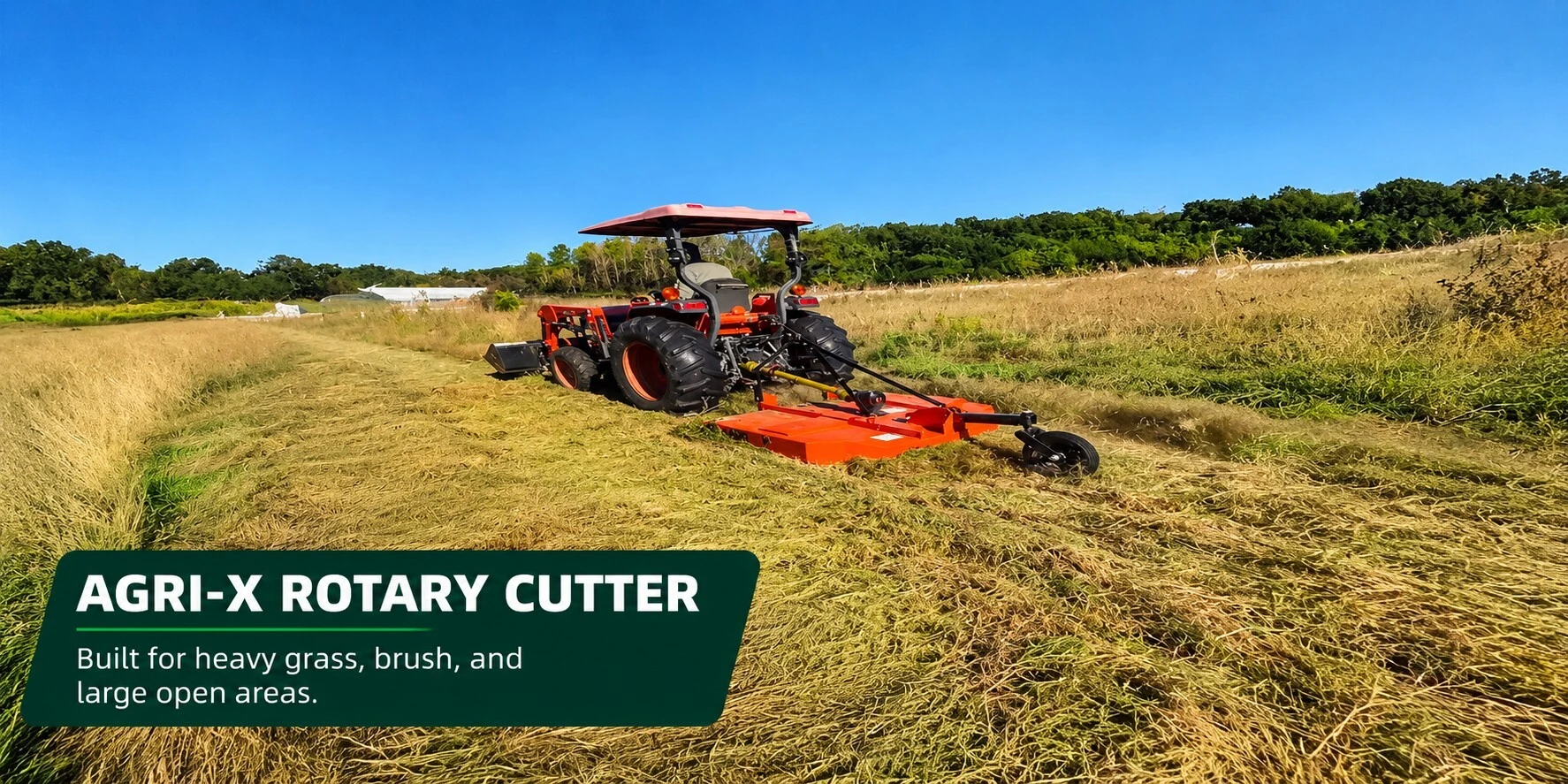
Three-point rotary cutter handling tall grass in a pasture.
How Much Horsepower Do You Need for a Flail Mower or Brush Hog?
The correct answer depends on the specific mower model, not simply whether it is a flail or rotary cutter. Compare tractor horsepower guidance, PTO horsepower requirements, implement weight, and required PTO speed.
| Check Before Buying | Why It Matters |
|---|---|
| PTO Horsepower | Engine horsepower and PTO horsepower are not interchangeable. |
| Working Width | Wider machines generally require more power, especially in dense growth. |
| Hitch Category | The three-point hitch must match the mower's mounting requirements. |
| Implement Weight | Verify lift capacity, ballast needs, and tractor stability. |
| PTO Speed | Many tractor mowers use 540 RPM, but verify the exact requirement. |
| Hydraulics | Offset and ditch-bank models may require rear hydraulic remotes. |
| Driveline Length | Correct PTO shaft sizing is essential to prevent damage. |
Important: A tractor advertised at 40 engine horsepower may deliver less horsepower at the PTO. Always verify compatibility using your tractor and mower specifications.
Flail Mower vs. Brush Hog Maintenance: What Should You Expect?
Flail Mower Maintenance Checklist
- Inspect knives or hammers and mounting hardware.
- Check drive belts and tension where equipped.
- Inspect rotor bearings and the rear roller.
- Grease specified service points.
- Inspect the PTO driveline and protective shields.
Rotary Cutter Maintenance Checklist
- Inspect blades, blade holders, and mounting hardware.
- Check gearbox lubricant.
- Inspect the tailwheel and mower deck.
- Check PTO shaft, shields, and safety chains.
- Grease specified service points.
A rotary cutter often has fewer individual cutting elements, while a flail mower may have numerous replaceable knives or hammers. Total ownership costs depend on operating conditions, impacts, wear, replacement-part pricing, and the specific machine.
Neither mower type is automatically cheaper to maintain.
Shop Mower Options at Styron Ag Parts
At Styron Ag Parts, we offer mowing equipment for compact tractors, general property maintenance, and demanding agricultural applications. Start with your intended use, then verify the specifications of the exact machine.
COMPACT PROPERTY MAINTENANCE
Farm-Maxx FL Series Flail Mowers
The Farm-Maxx FL Series is worth considering for compact tractor owners who need to maintain grass, trails, and general acreage.
Compare available working widths, tractor horsepower recommendations, hitch requirements, and implement weights before choosing a model.
Explore Farm-Maxx FL SeriesFLAIL MOWER SELECTION
Farm-Maxx Flail Mowers
For larger tractors or more demanding mowing applications, compare other Farm-Maxx flail mower configurations, including heavier-duty and offset designs where available.
Pay attention to rotor construction, cutting tools, working width, power requirements, and the vegetation each model is designed to handle.
Shop Flail MowersROUGH-CUT FIELD MAINTENANCE
Three-Point Rotary Cutters
If your primary application involves rough-cutting pastures, tall weeds, and overgrown fields, compare the rotary cutter options available through Styron Ag Parts.
Verify rated cutting capacity, working width, tractor horsepower requirements, and gearbox specifications.
Explore Mowers & Cutters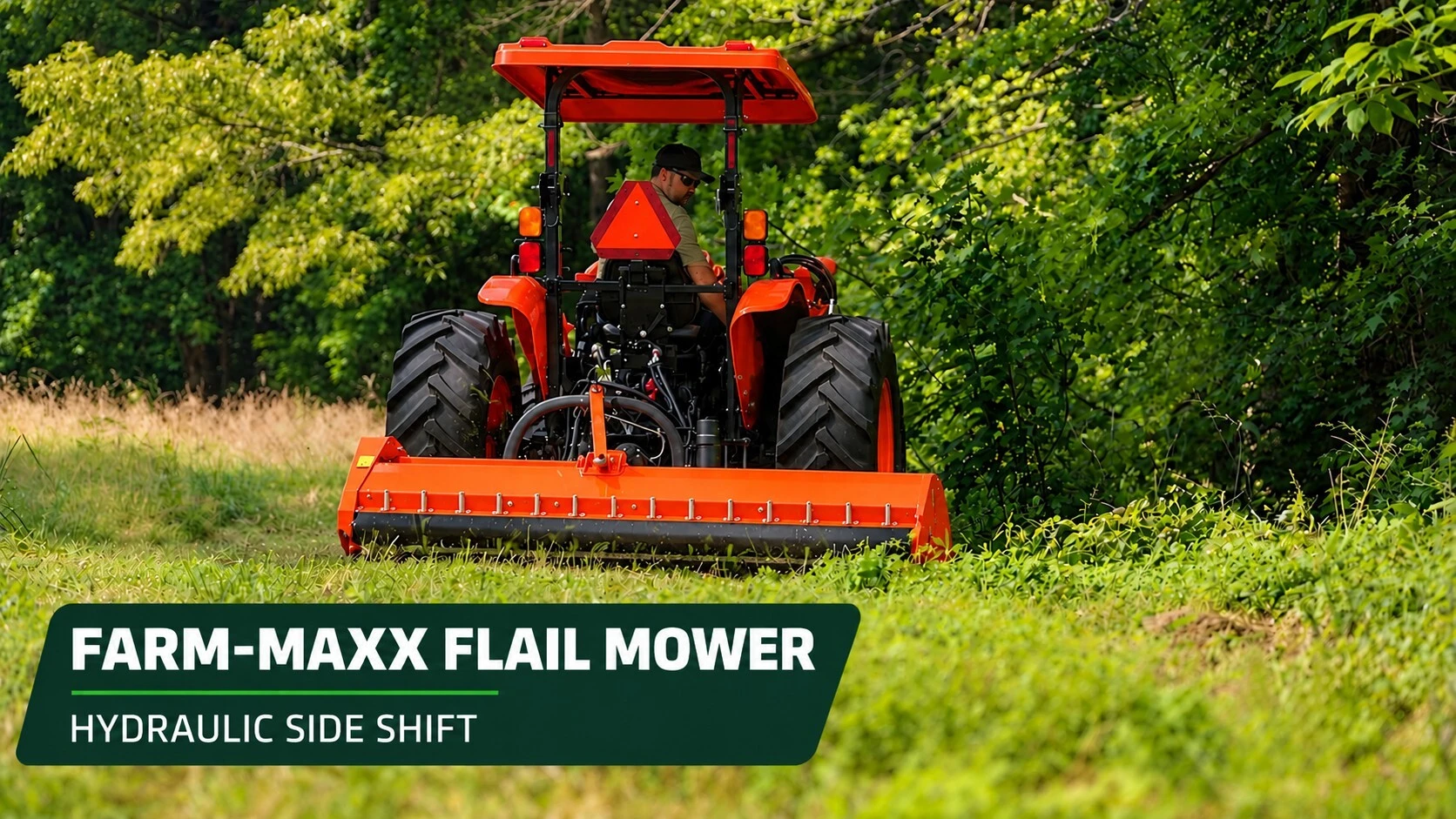
Farm-Maxx flail mower maintaining grass along a wooded property.
Which Mower Should You Buy? A Simple Decision Guide
- Identify Your Vegetation. Mostly grass and maintained trails? Start with a flail mower. Mostly tall weeds and rough pasture? Start with a rotary cutter.
- Decide How Important the Finish Is. Flail mowers typically process vegetation more finely, while rotary cutters prioritize rough-cutting performance.
- Check for Woody Brush. If you expect to cut saplings or woody stems, verify the mower's actual cutting-capacity rating.
- Match the Tractor. Confirm PTO horsepower, hitch category, lift capacity, PTO RPM, implement weight, and any hydraulic requirements.
- Consider Maintenance and Parts. Compare replacement cutting tools, belts, blades, bearings, gearbox components, and service accessibility.
Our Recommendation: For frequently maintained grass, orchards, and trails, a flail mower is often the stronger choice. For infrequently mowed pastures and rough vegetation, a rotary cutter is often more practical. If your property requires both types of work, two purpose-built machines may be the best long-term solution.
Ready to Choose the Right Tractor Mower?
Styron Ag Parts supplies tractor mowing equipment and replacement parts to customers nationwide. Browse available models, compare specifications, and find equipment that matches your tractor and mowing conditions.
Frequently Asked Questions About Flail Mowers and Brush Hogs
Is a flail mower better than a brush hog?
A flail mower is often better for regularly maintained grass and a finer finish. A brush hog is commonly better for rough pasture mowing and heavy vegetation within the cutter's rating. Neither is best for every application.
Can a flail mower cut brush or small saplings?
Some heavy-duty flail mowers can cut woody brush, but many compact flails are intended primarily for grass. Check the manufacturer's cutting diameter and operating instructions for the exact model.
Does a flail mower need more horsepower than a rotary cutter?
Not always. Required PTO horsepower varies with mower width, rotor or blade design, vegetation density, and the specific machine.
Which mower is best for maintaining a pasture?
Rotary cutters are a common choice for rough pasture maintenance. A flail mower can be attractive for regularly maintained pasture grass where a finer finish is desired.
Is a flail mower safer than a brush hog?
Flail mower housings may offer greater containment of some material, but both mower types can throw dangerous objects. Use all required guards and shields, inspect the area, and follow the manufacturer's safety instructions.
Can I use a flail mower on uneven or sloped ground?
Some flail mowers are designed for uneven ground, and specialized offset or ditch-bank models serve certain slopes and roadside applications. Never exceed tractor stability limits or the mower's approved operating angles.
Can I run either mower with a compact tractor?
Yes, if the specific mower is compatible. Confirm PTO horsepower, PTO RPM, three-point hitch category, lift capacity, implement weight, and driveline fit before purchasing.